San Diego’s Tree Protection Ordinance: What Every Homeowner Must Know
A complete guide to permits, protected tree categories, penalties, and how to stay on the right side of San Diego’s urban forestry rules in 2026.
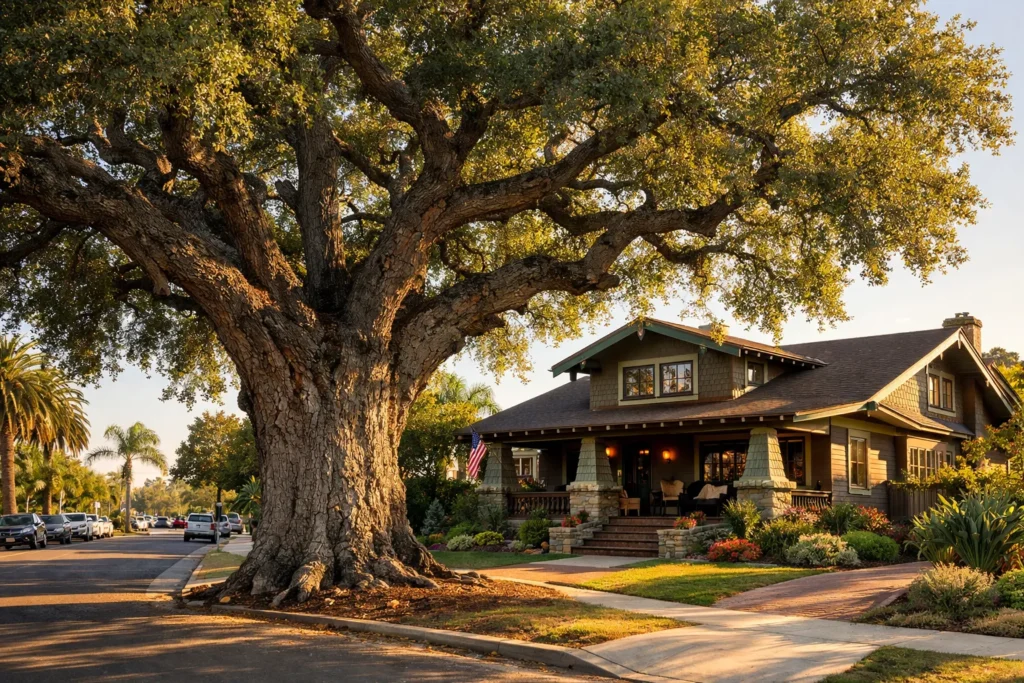
Here is a scenario that plays out more often than you might think. A San Diego homeowner decides that the big old tree in their front yard is too close to the sidewalk. It’s lifting the concrete, looks scraggly, and they want it gone before the rainy season. So they hire a professional tree service in San Diego to cut it down over a weekend. The following week, they get a notice from the City of San Diego. The tree, it turns out, was a Landmark Tree under Council Policy 900-19. The fine? Three hundred percent of the tree’s assessed value, determined by the City Urban Forester. That can easily run into the thousands of dollars.
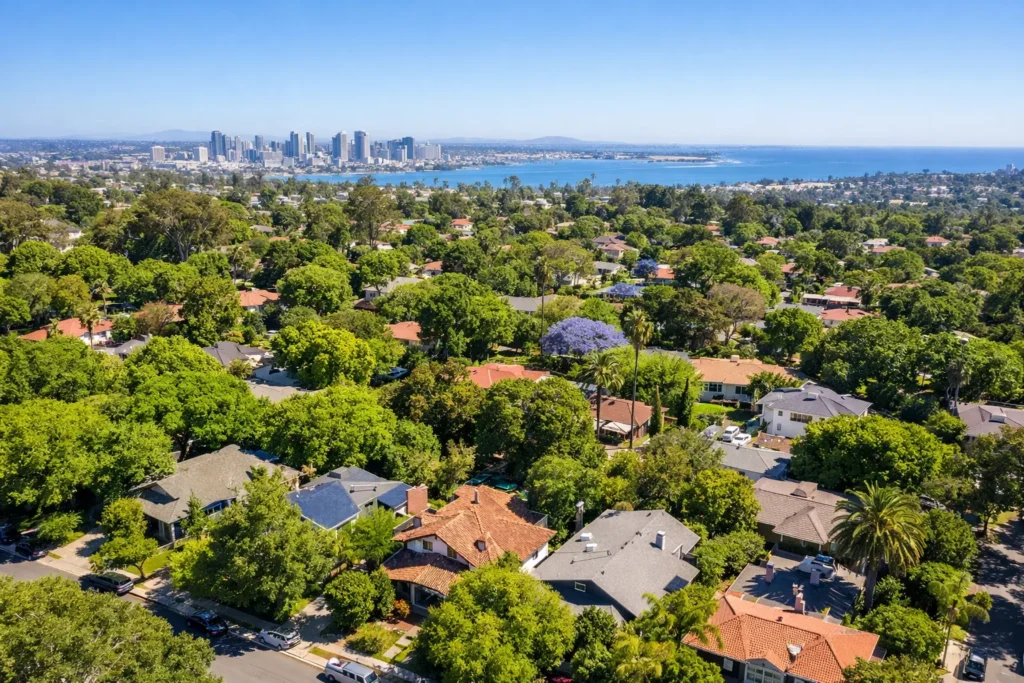
This is not an edge case. San Diego has a layered, sometimes confusing tree protection system that covers public street trees, heritage and landmark trees, trees required by development permits, and even some trees on private property. Most homeowners have no idea their backyard oak or that grand eucalyptus near the curb could be legally protected until it is too late.
This guide covers everything you need to know: what trees are protected, when you need a permit, how to get one, what the penalties look like, and what to do if a tree genuinely poses a safety hazard. Whether you are planning a renovation, dealing with a tree dispute with a neighbor, or just curious about that magnificent Moreton Bay fig on your block, you will find real, actionable answers here.
What Is San Diego’s Tree Protection Policy and Who Created It?
San Diego’s primary tree protection framework is Council Policy 900-19, titled ‘Public Tree Protection.’ The City Council adopted it in June 2005, building on years of advocacy from what was then called the Tree Advisory Board (renamed the Community Forest Advisory Board, or CFAB, in 2002). The policy was designed to protect trees with historical, cultural, aesthetic, or ecological value located in public rights-of-way, on City-owned open space, in parks, and on private land restricted by dedicated open space easements.
But here is the nuance most homeowners miss. Private property trees are largely your own business unless they fall into specific protected categories. The ordinance is not a blanket ban on removing your own trees. It is a targeted protection system for trees that have been formally designated or that qualify under defined criteria.
There is also a parallel framework at the County level that applies to unincorporated areas. And if you live in a coastal zone or a community with a specific design overlay, additional rules may apply on top of the City baseline. San Diego is made up of over 100 distinct community planning areas, some of which have their own supplemental tree canopy guidelines.
The takeaway: before you touch any tree that isn’t clearly a small, non-protected species entirely on your private property, verify its status. The five minutes it takes to check is a lot cheaper than a fine that can run three times the tree’s appraised value.
Which Trees Are Actually Protected? The Four Designation Categories
Council Policy 900-19 creates four formal designation categories. Each has distinct criteria, and trees must be nominated, inspected, and officially designated to carry formal protection. Here is how each one works.
Landmark Trees
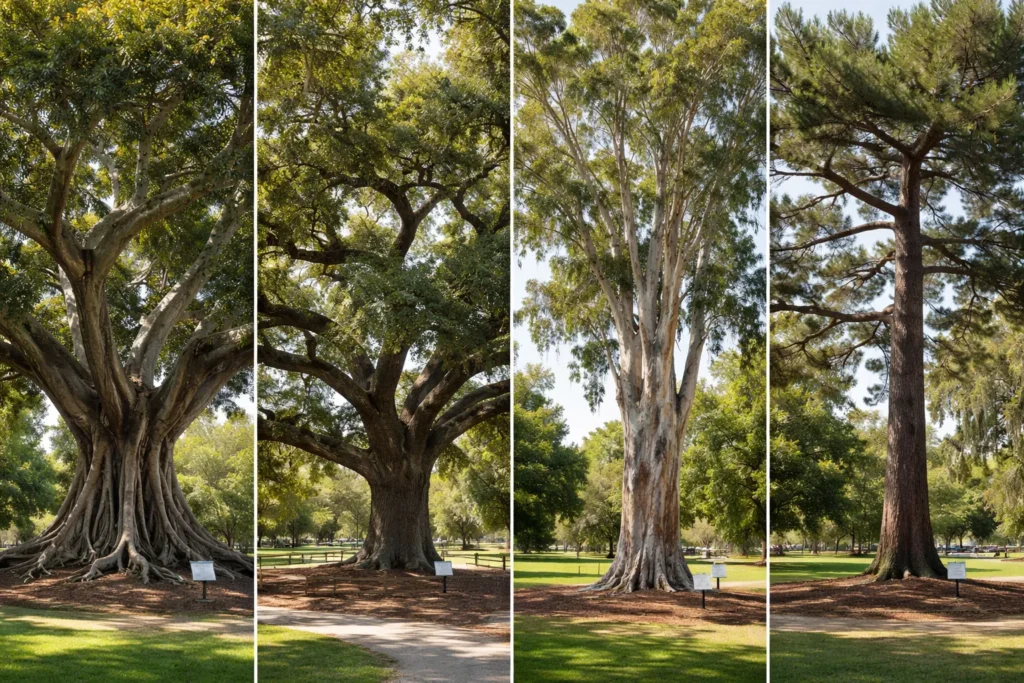
A Landmark Tree is one that is unusual or possesses very high aesthetic quality for its species. The policy lists several characteristics that can qualify a tree: a size that has far surpassed the norm for its species, an exceptional or intact aesthetic form, an unusual shape not commonly seen in most trees, particularly interesting flowers or branching patterns, or being a species that rarely occurs within the City. The intent is explicitly narrow. This is not meant to apply to a broad number of trees. It honors genuinely exceptional specimens.
Heritage Trees
A Heritage Tree is one connected to a historically significant individual, event, or time period. Proving age can be done through aerial photographs, estimating from the age of adjacent development, or estimating based on the tree’s size. A grand oak that predates a neighborhood’s development and may have provided shade to original settlers could qualify. The historical connection does not need to be officially documented with primary sources, though stronger documentation strengthens a nomination.
Parkway Resource Trees
These are trees located in the parkway strip, the patch of land between the sidewalk and the street. They are often the trees most homeowners think of as ‘street trees,’ though the City technically maintains them. Parkway Resource Trees receive specific protections because they contribute directly to the street canopy, provide shade and cooling, manage stormwater, and give neighborhoods their visual character.
Preservation Groves
A Preservation Grove consists of at least ten trees with trunks of six inches or more in diameter, located in environmentally sensitive lands or parkland. These groves often include native species and provide important wildlife habitat. In San Diego’s ecology, mature groves of coast live oak, Engelmann oak, or toyon can support dozens of bird and insect species that depend on mature canopy.
When Do You Need a Tree Removal Permit in San Diego?
This is the question most homeowners get wrong. The rule of thumb the City provides is actually straightforward: you do not need a permit to remove a dead, dying, diseased, or hazardous tree from your property, provided the tree is not in one of the protected categories listed below.
You need a permit if the tree in question is any of the following:
- A designated Landmark Tree
- A designated Heritage Tree
- A designated Parkway Resource Tree
- A designated Preservation Grove Tree
- A Street Tree (any tree in the public right-of-way adjacent to your property)
- A tree required by a Development Permit (including trees planted as a condition of a building permit)
The last category catches a surprising number of homeowners off guard. If your home was built or renovated under a permit that included trees as a landscaping condition, those trees may be legally required to remain on the property regardless of your personal preferences. Removing them is a violation of your development permit conditions.
The permit application for San Diego street trees is a no-fee permit. Yes, it costs nothing to apply. You can download the City of San Diego No Fee Tree Permit Application or call the No Fee Street Tree Permit Line at (619) 236-5513. You will need to provide a site plan showing the tree’s location, the species, the reason for removal, and a DigAlert ID when the work involves digging or removal.
Quick Reference: Do You Need a Permit?
| Situation | Permit Required? | Contact |
|---|---|---|
| Dead tree on private property (not designated) | No | N/A |
| Street tree (parkway strip) | Yes | (619) 236-5513 |
| Landmark or Heritage Tree | Yes (rarely granted) | City Urban Forester |
| Tree required by development permit | Yes | Development Services |
| Private tree, no designation, not required by permit | No | N/A |
| Tree in public park or City open space | Never (City only) | Get It Done app |
Street Trees: The Category That Trips Up the Most Homeowners
Street trees are arguably the most commonly misunderstood category. Many San Diego homeowners believe that the tree growing in the parkway strip between their sidewalk and the street is ‘their tree.’ They planted it, they water it, they rake the leaves. But legally, street trees in the public right-of-way are City trees. You do not own them. You do not have the unilateral right to trim them, remove them, or alter them in any way without a permit.
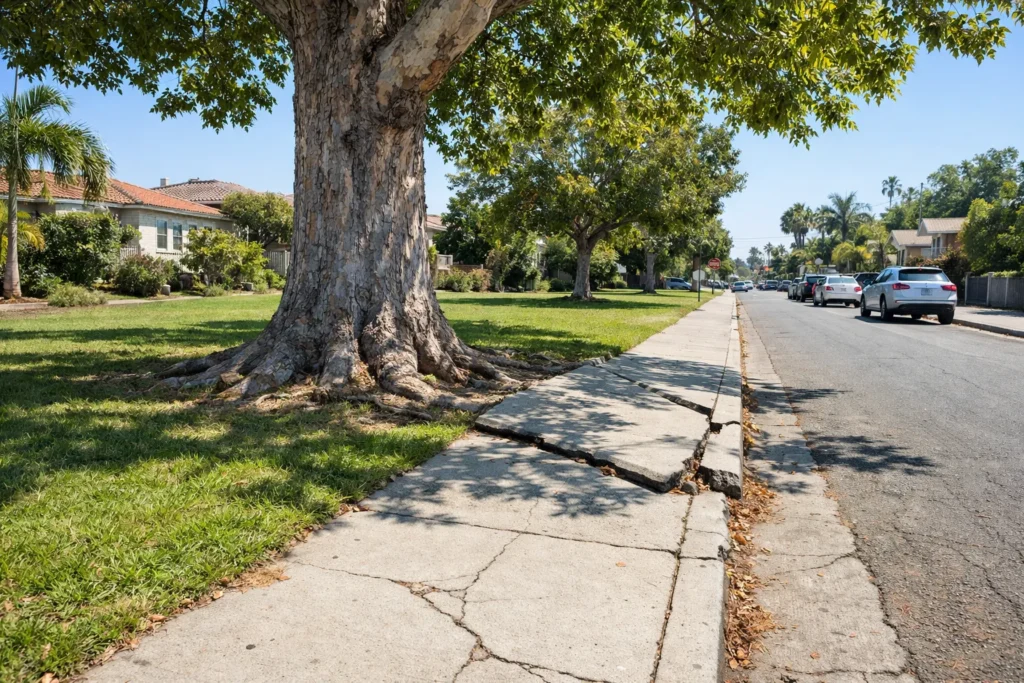
The City’s Right of Way Management Division (part of the Transportation Department) is responsible for maintaining street trees. The criteria they use include public safety, clearance for vehicles and pedestrians, visibility for traffic signals, and interference with overhead or underground utilities. If a street tree is causing sidewalk damage, the City has a process for that too. You report it through the Get It Done app or by calling Street Division dispatch at (619) 527-7500. The City reviews the situation and, if infrastructure repair requires removal, the adjacent property owner must consent.
Here is an important detail that surprises homeowners: if the City determines a street tree must come down, you can sometimes expedite the process by agreeing to cover the associated sidewalk repair costs. Without that agreement, removal and repairs can take up to 48 months from the determination date. That is four years of temporary asphalt patching while you wait.
If you want a street tree trimmed for clearance, safety, or visibility, you can request a no-fee permit. The City’s inspectors will evaluate whether trimming is warranted under the same criteria. Professional tree trimming in San Diego without a permit is a violation of Section 62.0604 of the Municipal Code, which prohibits removal of planting without a permit in the public right-of-way.
Important note on topping: Topping trees is illegal under current California statutes. Not just frowned upon. Illegal. Topping produces aesthetically inferior trees with weak trunks and limbs, and the City takes it seriously. If a contractor offers to ‘top’ a street tree, that is a red flag. They are either uninformed or unconcerned about compliance, neither of which you want when it is your property on the line.
What Are the Penalties for Removing a Protected Tree Without a Permit?
The financial consequences are significant enough that they deserve their own section. Under Council Policy 900-19, the penalties for unauthorized removal or damage of a protected tree are structured as follows.
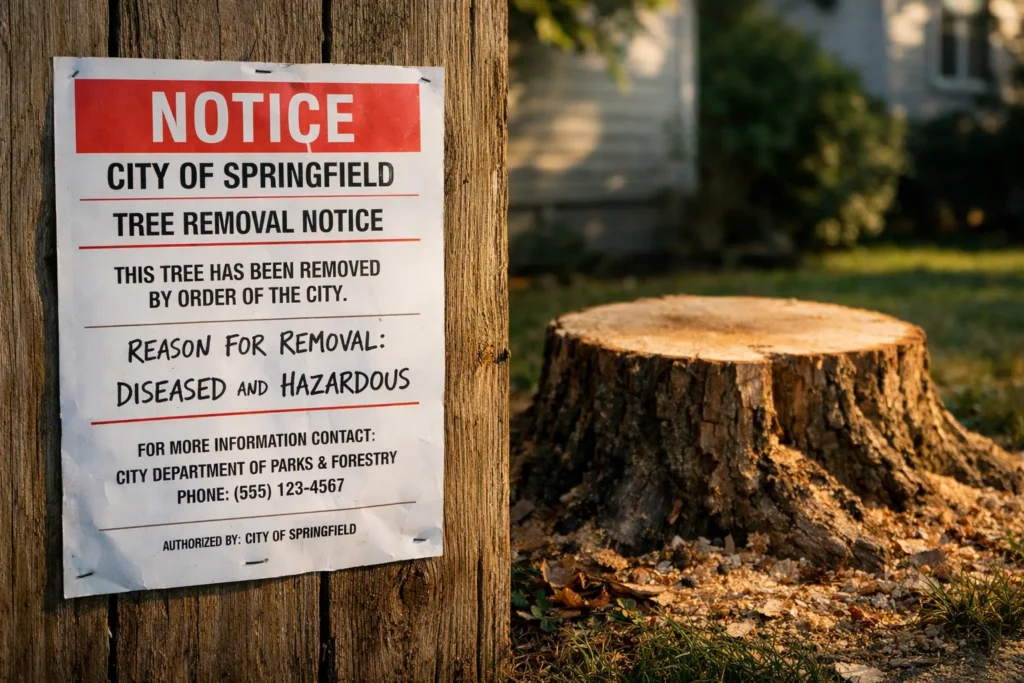
For protected public trees (designated trees in the right-of-way, parks, or public lands), the fine is 300 percent of the assessed value of the tree, or up to the maximum amount allowed under the Municipal Code. The City Urban Forester determines that assessed value. For a mature, healthy Landmark Tree or Heritage Tree, that assessed value is not calculated like a shrub from Home Depot. Professional arborists use formulas from the Council of Tree and Landscape Appraisers that can put the value of a large, healthy specimen at tens of thousands of dollars. Three hundred percent of that is a life-altering number.
Beyond the fine, you may also be required to plant replacement trees, submit to additional inspections, and potentially face legal action from the City Attorney’s office if the tree was particularly significant.
For trees damaged but not killed, the City still has authority to assess penalties. ‘Fatal damage’ is the specific threshold in the policy, but causing serious harm to a protected tree without authorization is also grounds for action. This includes root pruning that results in decline, construction damage within the drip zone, and soil compaction from equipment.
Here is the honest reality though. Enforcement is uneven. A 2019 case in the College Area involved a grocery store parking lot where approximately 100 trees were illegally topped by an unlicensed contractor. The work violated both ANSI A300 pruning standards and City code. The documentation was public and damning. And yet the process of enforcement moved slowly. The City has no dedicated code compliance officer with arboricultural certifications. Violations are flagged, reported, and resolved through a process that depends heavily on community pressure, documentation, and staff bandwidth.
This does not mean you should gamble on enforcement being slow or inconsistent. It means you should understand that the system is complaint-driven, that neighbors and community members do file reports, and that the Get It Done app makes it easier than ever to document and submit violations. The risk is real.
How to Get a Tree Removal Permit: The Step-by-Step Process
If you determine that you need a permit, here is how to move through the process without unnecessary delays.
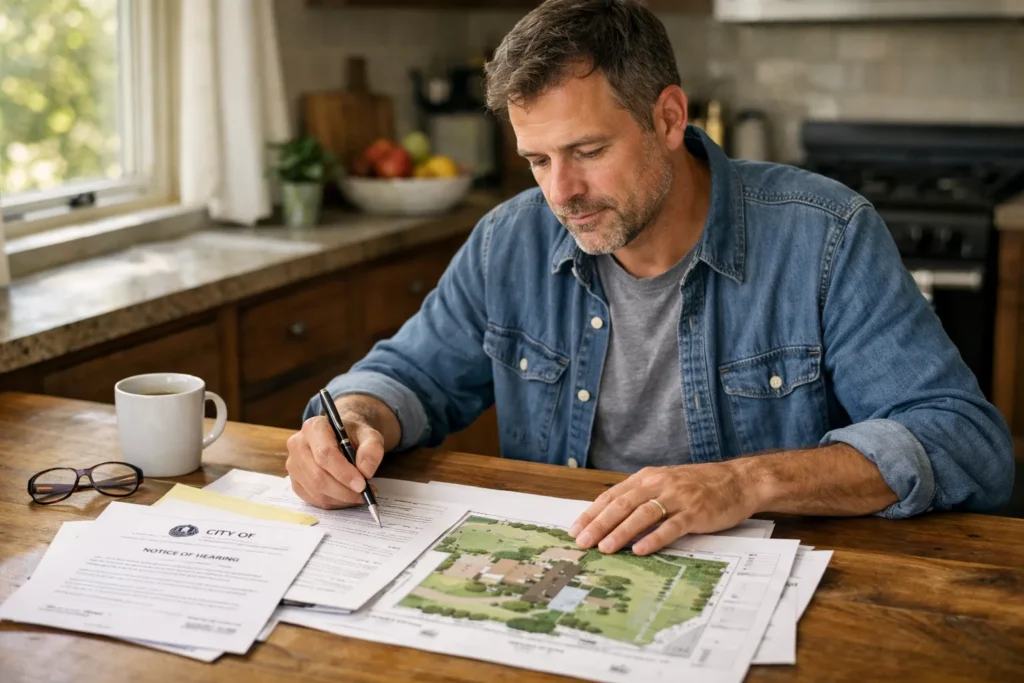
Step 1: Verify the Tree’s Status
Before doing anything else, confirm whether your tree is designated or protected. You can check the City’s Geographic Information System maps, contact the Right of Way Management Division, or call the Development Services Department if your property has active or historic permits. If you are unsure whether a tree was required as a development condition, pull the permit history for your property through the City’s online portal.
Step 2: Get a Certified Arborist Report
For any designated tree, you will need a report from a certified arborist in San Diego supporting your removal request. The City Urban Forester reviews this report along with any recommendations from the Community Forest Advisory Board before making a determination. The report should document the tree’s species, health, structural integrity, and the specific reason removal is warranted (imminent safety hazard, disease, infrastructure conflict). The International Society of Arboriculture (ISA) certifies arborists, and you can find a local certified professional through their online directory.
Step 3: Complete the No-Fee Permit Application
Download the application from the City’s website or request it by calling (619) 236-5513. Fill in all applicable information, include a detailed site plan on page 2 of the form showing the tree’s location relative to property lines and structures, specify the species, and obtain a DigAlert ID if any excavation is involved. Before applying, consult a licensed tree removal service in San Diego to confirm the tree’s species and condition for your arborist report.
Step 4: Wait for Review and Approval
The City reviews the application in light of the arborist report and CFAB input. Here is the important part of the policy: no permit will be issued for tree removal unless a clear, imminent, and significant public safety hazard exists, or unless the City Urban Forester determines, with input from the CFAB and an arborist’s recommendations, that protection may not be appropriate. Even then, the applicant must agree to pay 100 percent of the assessed value of the tree. This is not a rubber stamp process. Permits for designated trees are genuinely difficult to obtain, and intentionally so.
Step 5: Arrange Replacement Planting if Required
Approval often comes with conditions, including replacement planting. The species selected must be consistent with the community’s street tree plan or match existing species in the community. The City may require planting at a specific location and will sometimes expect the property owner to water and care for replacement trees until they become established.
What to Do If a Tree Is Dangerous or Has Fallen
Emergency situations are handled differently from routine removal requests, and it is important to know who to call and when.
If a storm-damaged limb or fallen tree is blocking a road or is on public property, call the City of San Diego Streets Division at (619) 527-7500 at any hour. You can also report through the Get It Done portal. This is an emergency response line and the City prioritizes public safety situations.
If a public tree has fallen onto your private property, contact Street Division dispatch immediately. They handle the removal of the portion on or over public land. Anything on your private property after that is your responsibility and your expense.
If your own private tree has fallen into the public right-of-way, Street Division will remove the portion up to your property line. The segment that remains on your land is yours to remove and dispose of.
For power line interference, call SDG&E at (800) 411-7343 and press option 1. SDG&E treats any tree threatening power infrastructure as an emergency and can act without the standard City permit process in those situations.
The safety exemption in Council Policy 900-19: Even for designated Landmark or Heritage Trees, nothing in the policy restricts removal if the tree is a genuine threat to public safety, provided that reasonable efforts for additional care, corrective actions, or maintenance to correct the problem have been made first. This exemption exists precisely because the policy is not designed to put people or property at risk for the sake of a tree. But it does require documenting those reasonable efforts.
Nominating a Tree for Conservation: The Voluntary Designation Option
Here is something most homeowners do not know: you can nominate a tree on your own private property for voluntary conservation status. Council Policy 900-19 explicitly allows this.
If you own a remarkable tree and want it to carry formal protection even after you sell the property, you can nominate it for conservation. The designation can be specified as a deed restriction, meaning it carries with the property permanently. Future owners would be bound by the same protections.
The nomination process works like this. You submit a Conserve a Tree Nomination Form, available from the City’s trees page at sandiego.gov. The City’s Right of Way Management Division inspects the tree to confirm it meets the criteria for one of the four designation categories. If it qualifies, the request goes to the Community Forest Advisory Board for evaluation and a recommendation for protected status.
Why would anyone voluntarily encumber their property? Several reasons, actually. Environmental legacy is one. Some homeowners have trees that have been on their land for generations, and they want legal protection to ensure those trees survive development pressure. Others nominate trees for neighborhood character reasons or because they are seeking recognition for a particularly exceptional specimen.
From a practical standpoint, a designated tree on private property can also potentially increase perceived property value in tree-conscious neighborhoods, though this is anecdotal rather than documented. The San Diego real estate market consistently shows that mature tree canopy is a desirable feature.
The Community Forest Advisory Board: Who They Are and Why They Matter
The Community Forest Advisory Board (CFAB) is not just an obscure bureaucratic body. It is a genuinely important stakeholder in San Diego’s urban forestry decisions. Formed in 2002, CFAB advises the Mayor, City Council, and City Manager on all policy issues relating to urban forestry. They evaluate tree conservation nominations, weigh in on permit applications for designated trees, and advocate for policies that expand and protect San Diego’s tree canopy.
CFAB meetings are open to the public. If you are dealing with a significant tree issue, attending a meeting or submitting written comments to the board can actually influence outcomes. Community groups are explicitly encouraged by the policy to provide citywide assessments of trees considered important community resources, and CFAB is the body that receives and considers that input.
The board also works on San Diego’s Climate Action Plan commitments related to urban forestry. The City has formal goals around expanding tree canopy, and CFAB is involved in tracking progress, recommending planting priorities, and pushing for stronger code compliance tools.
How This Differs If You Live in an Unincorporated San Diego County Area
If your property is in an unincorporated area of San Diego County rather than within a City of San Diego municipality, the rules are administered by the County, not the City.
The County’s framework for trees in the right-of-way requires a tree permit before trimming, removing, or planting trees or shrubs on County rights-of-way. Applications go to the Department of Public Works at (858) 694-2055. Importantly, there is no fee for a County tree permit either. The applicant provides a sketch of the tree’s location, the species, whether the work involves planting or removal, and justification for the application.
Under the County permit, the homeowner assumes responsibility for all damages resulting from the removal, trimming, or planting. This is a meaningful liability point. If a County right-of-way tree removal causes damage to adjacent infrastructure, it is on the permit holder.
The County also has a Resource Protection Ordinance that governs vegetation in environmentally sensitive lands. If your property contains or borders sensitive habitat such as wetlands, riparian areas, or native coastal sage scrub, the thresholds for vegetation removal are significantly more restrictive, and violations can result in misdemeanor criminal charges with civil penalties of up to $2,500 per day per violation.
What Happens During Development or Renovation? Trees and Building Permits
This is where things get especially important for homeowners doing renovations, additions, or new construction.
When a development or building permit is approved, it often includes landscaping conditions. These conditions can specify trees that must be planted as part of the project, and those trees are then legally required to remain on the property in healthy condition. The City’s code requires that trees in permitted developments be maintained in a healthy state. Letting a required tree die through neglect can be a code violation in the same way that removing it without authorization is.
The City’s Development Services Department cross-checks protected tree resources against any new permit applications. If your renovation or addition would affect a designated tree’s root zone, drip zone, or canopy, you will need to demonstrate mitigation in your permit application. The City Urban Forester assesses the situation and may require protective measures such as root barriers, construction fencing around the drip zone, or redesign of the project to avoid impact.
Tree pruning and root pruning during construction must occur under the guidance of a licensed arborist with written approval from the City Arborist. This is not optional. Having a contractor casually cut roots during a foundation dig without arborist oversight is a violation, even if the tree itself is not in the path of construction.
One more thing worth flagging: regardless of sidewalk damage caused by tree roots, no action will be taken that results in the death of a protected tree. The City’s policy explicitly states this. Sidewalk relocation or redesign must be considered before removal is authorized. This matters if you are wrestling with a tree root that has cracked your driveway or lifting your front path.
Neighbor Disputes Over Trees: What the Law Actually Says
Few neighborhood conflicts escalate faster or more emotionally than tree disputes. The scenarios are familiar: a neighbor’s tree drops branches on your roof, roots invade your sewer line, a massive canopy blocks your solar panels, or limbs create a fire hazard near your home.
California law generally allows you to trim branches and roots from a neighbor’s tree up to the property line at your own expense, provided the trimming does not kill the tree. But there are meaningful limits to this rule, especially in San Diego.
If the neighbor’s tree is a designated Landmark or Heritage Tree, your trimming rights are constrained by the protections on that tree. You cannot prune a designated tree in ways that cause fatal damage, even if the branches hang over your property. You would need to work through the City permit process to address the situation.
For tree roots invading your sewer lateral, San Diego’s public utilities guidance is clear: the water system from the meter and the sewer lateral from the property connection are the property owner’s responsibility. If a neighbor’s tree roots have grown into your pipes, that is a private civil matter between property owners. The City will not remove a public tree to resolve a private sewer issue, though they will review the situation if the tree is a City-maintained street tree.
When a private tree falls onto a neighbor’s property, liability generally depends on whether the tree owner knew or should have known the tree was diseased, dying, or structurally compromised. A sudden failure of an otherwise healthy tree is generally not actionable. A failure of a tree that the owner had been warned about repeatedly is a different story. Document everything. Written notice to a neighbor about a concerning tree creates a paper trail that matters if something goes wrong.
Recent Developments: Encinitas and the Push for Expanded Tree Protection in 2025
The conversation around tree protection in the San Diego region is actively evolving. In early 2025, the city of Encinitas (a separate municipality within San Diego County) moved a mature tree protection ordinance forward for City Council review.
The proposed Encinitas ordinance defines a ‘mature tree’ as one with an 11-inch diameter measured at a standard height. It would apply primarily to commercial and multifamily properties, with single-family homeowners largely exempt, though that exemption itself became a point of controversy. Commercial property owners argued the exemption was unfair, while planning commissioners expressed concern that the expert requirements and arborist reports mandated by the process might be overly burdensome.
The proposed ordinance also requires replacement tree planting, with the number of replacements varying based on whether the owner selects a native or non-native species and whether planting occurs on-site or off-site. Fire-risk zones and dead or dying trees receive specific exemptions.
Why does Encinitas matter to San Diego homeowners? Because municipal tree protection trends ripple outward. The City of San Diego’s own CFAB and policy staff watch regional developments closely. If Encinitas establishes a workable model for mature tree protection, it strengthens the case for similar policies in other San Diego County municipalities. Homeowners in San Diego proper may see expanded protections within the next few years, particularly as the City’s Climate Action Plan commitments around urban canopy increase in urgency.
FAQs
Can I remove a tree on my own private property without any permit at all?
Yes, in many cases. If the tree is not designated (Landmark, Heritage, Parkway Resource, or Preservation Grove), is not a street tree, and was not required by a development permit, you generally do not need a permit to remove it from your private property. Always verify the tree’s status before you proceed.
What is the no-fee street tree permit and how do I get one?
The City of San Diego offers a no-cost permit for trimming, removing, planting, or root pruning street trees. You can request the application by calling (619) 236-5513 or downloading it from sandiego.gov. A City inspector will review the request and determine whether the work is warranted before issuing approval.
How do I find out if a specific tree on my property is designated?
Contact the City of San Diego’s Right of Way Management Division or Development Services Department. You can also check permit history for your property through the City’s online portal to see if any trees were required as a development condition. The City maintains GIS maps of designated trees, though they may not be fully comprehensive.
Can I be fined for a contractor’s unauthorized tree removal?
Yes. If you hired the contractor and authorized the work, you bear responsibility for the outcome. The policy assigns fines to ‘those individuals found to be responsible’ for removal or damage. Work only with licensed tree service contractors who understand San Diego’s regulations and pull required permits.
What is tree topping and why is it illegal?
Tree topping means cutting the main trunk or major scaffold branches to reduce a tree’s height dramatically, leaving large stubs. California law prohibits it because it creates trees that are structurally weak and aesthetically damaged, and it is fundamentally harmful to the tree’s long-term health. Any contractor who offers to top your trees is not following industry or legal standards.
Does a Heritage Tree designation affect my property value or insurance?
It can. Voluntary designation creates a deed restriction that carries with the property, which affects future buyers’ rights regarding that tree. Most buyers appreciate significant trees, but some may view the restriction as limiting. For insurance purposes, the presence of a large, mature tree can cut both ways, so consult your insurer if you have questions about a specific situation.
What happens if I buy a property and later discover a protected tree I did not know about?
You are responsible from the date of purchase. This is another reason to do thorough due diligence before buying. A title search and a review of the property’s permit history should reveal any tree-related conditions. Consider hiring a certified arborist for a pre-purchase tree assessment if the property has significant trees.
Can I nominate my neighbor’s tree for conservation?
Yes. The policy allows any community group, individual citizen, Council Member, Mayor, City Manager, or designated city staff to request a tree protection designation. You do not need to be the property owner to nominate a tree. The City will inspect it and evaluate the nomination on its merits, though the designation process also considers the owner’s position.
The Bottom Line
San Diego’s tree protection system is not designed to trap homeowners. It is designed to preserve a public good. The trees that qualify for formal protection are genuinely significant specimens that took decades or centuries to grow and cannot be replaced on any human timescale.
The system’s real weakness is that most homeowners do not know about it until they are already in trouble. That is what this guide is meant to change.
Here are the three most important things to do starting today. First, walk your property and note every significant tree, especially anything near the parkway strip, near your property’s edges, or that looks like it may have been planted as part of a permitted development. Second, call (619) 236-5513 or visit sandiego.gov/trees and verify whether any of those trees carry protected status. Third, If you are planning any construction, renovation, or landscaping that involves trees, get a certified arborist involved early. Once removal is approved, stump removal in San Diego is a separate step that must also comply with permit conditions.
The permits, the phone numbers, the exemptions, and the penalties all matter less than this simple principle: in San Diego, trees that have grown into community landmarks are considered community property in a meaningful sense, even when they stand on private land. Respecting that principle before you pick up a chainsaw is not just legally smart. It is the right call.
Have a specific tree situation in San Diego you’re trying to navigate? Share your question in the comments. Real scenarios from real homeowners are often more instructive than any guide can be, and you may find others dealing with the same issue.