
Tree Removal Service Cost in San Diego: The Complete Homeowner’s Guide
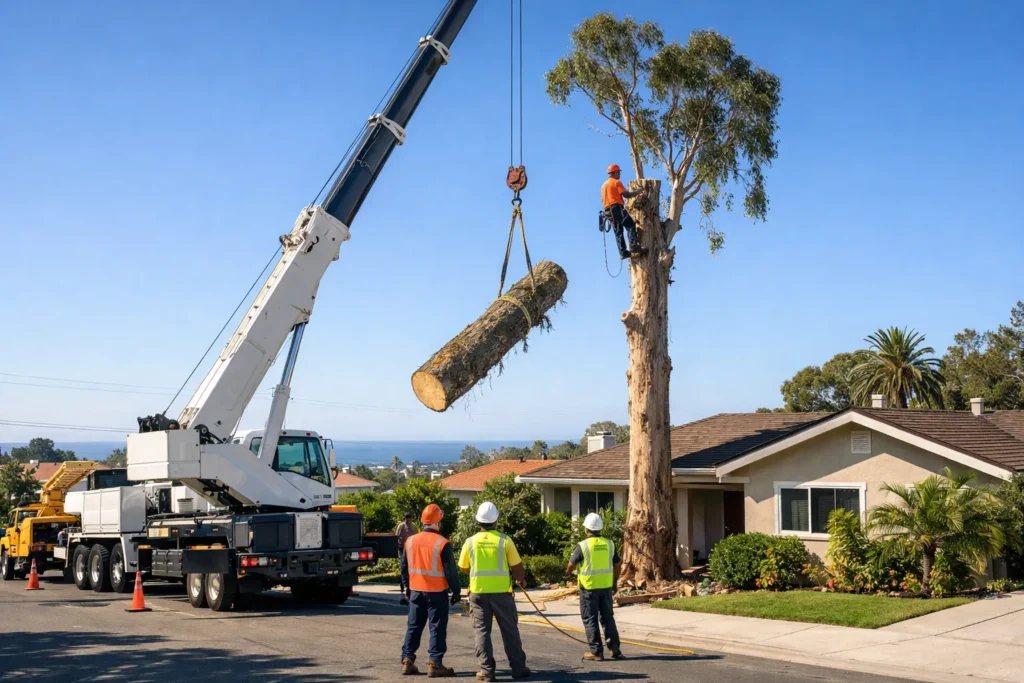
Last September, a homeowner in Clairemont called me in a panic. A tall eucalyptus leaned toward her roof after a storm. The first quote was $3,800. The second was $2,400. The third was $1,200 if she “booked today.” She felt trapped between fear, cost, and legal uncertainty.
Here’s what nobody tells you.
Tree removal is not just a service. It is a risk transfer decision. You are paying someone else to assume physical, legal, and financial risk that you should never take yourself. When you understand that, pricing stops feeling random and starts feeling logical.
This guide exists because I’ve watched homeowners overpay, underpay, get fined, get injured, or destroy property value because nobody explained the full picture.
By the end, you will know:
- What tree removal actually costs in San Diego right now.
- What drives that cost.
- When removal is the wrong choice.
- How to avoid panic decisions that cost thousands.
Let’s start with the number everyone wants.
How Much Does Tree Removal Cost in San Diego Right Now?
Short answer:
Most homeowners in San Diego pay between $600 and $900 per tree for standard removals. Small trees can be as low as $200. Large, risky removals can exceed $2,000.
That range exists because pricing is not about the tree. It is about the danger created by removing the tree.
Here is the honest breakdown.
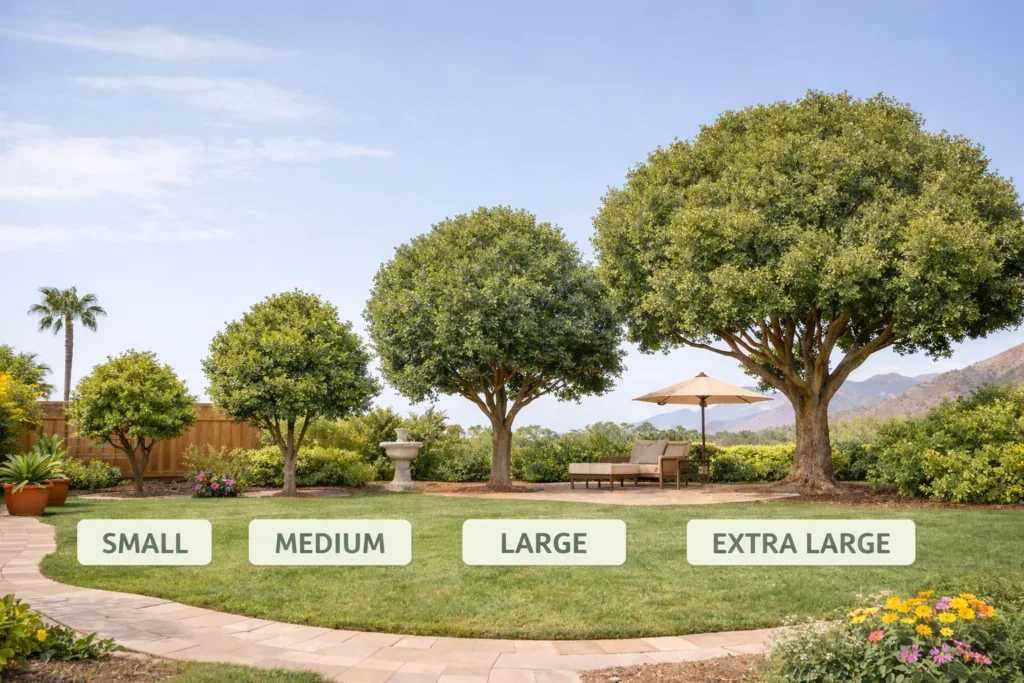
Tree Removal Cost in San Diego (2026 Estimates)
| Tree Size / Service | Typical Height | San Diego Price Range |
|---|---|---|
| Small tree removal | Up to 30 ft | $200 – $450 |
| Medium tree removal | 30–60 ft | $450 – $1,000 |
| Large tree removal | 60–80 ft | $1,000 – $1,800 |
| Extra large / high-risk | 80+ ft or hazardous | $1,800 – $4,000+ |
| Palm tree removal | Any height | $500 – $1,500 |
| Emergency removal | Storm / fallen trees | $1,500 – $5,000 |
| Stump grinding | Per stump | $150 – $300 |
| Permit fees | City / HOA | $50 – $200 |
Prices vary based on access, equipment, risk level, and permits.
Typical Price Ranges by Size
- Small trees up to 30 feet: $200 to $450
- Medium trees 30 to 60 feet: $450 to $1,000
- Large trees over 60 feet: $1,000 to $2,000+
- Extra large or high risk trees: $2,000 to $4,000+
If you see a flat price online, ignore it. San Diego terrain, tight lots, power lines, and coastal regulations distort averages.
Why San Diego is More Expensive than you Expect
Three reasons.
First, labor costs are higher. Certified arborists earn more here than inland counties.
Second, access is harder. Smaller lots, slopes, pools, solar panels, and utility lines add risk.
Third, regulation is tighter. Permits, protected species, and HOA rules increase overhead.
So if you read a national blog saying “tree removal costs $300,” that is not your reality.
What Actually Drives Tree Removal Cost in San Diego (Beyond Size)
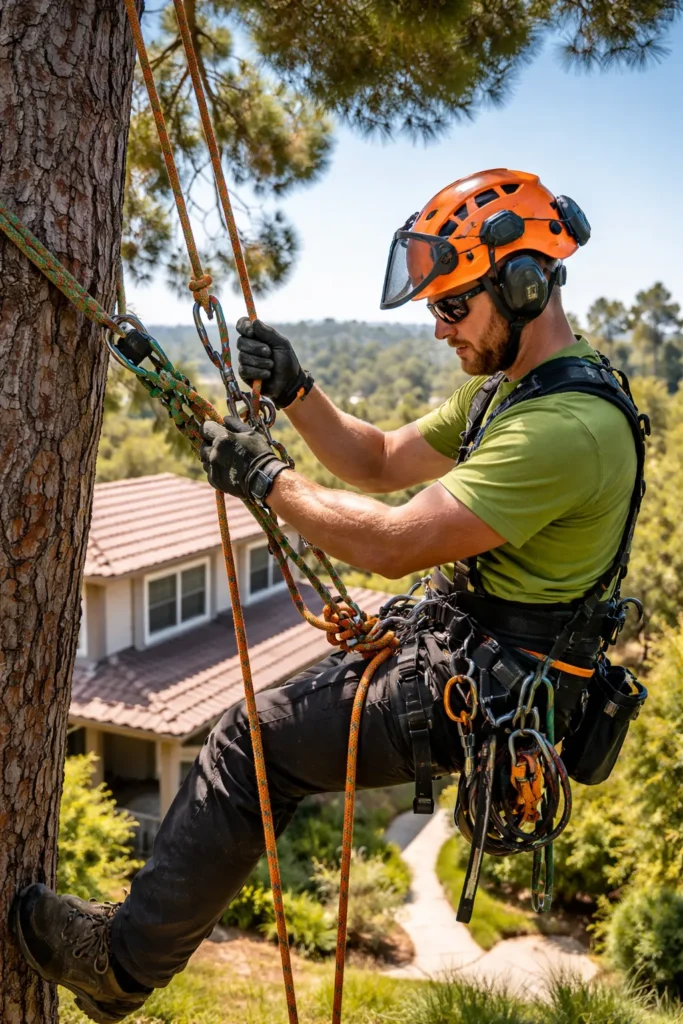
Here is the part contractors rarely explain clearly.
You are not paying for cutting. You are paying for controlled disassembly in a dangerous environment.
Access
If a crew can drop the tree into an open yard, costs drop.
If they must rope, lower, and rig every limb over a house, pool, fence, or neighbor’s yard, costs rise fast.
One crane rental alone can add $600 to $1,200.
Proximity to structures and power lines
Anything near a building, power line, or road triggers insurance risk. Insurance is expensive. That cost shows up in your quote.
This is why two trees of the same size can differ by $1,000.
Species
Eucalyptus, palms, and ficus cost more. They are heavier, fibrous, and harder to rig safely.
I once watched a crew underestimate a palm’s weight. A limb swung wider than expected and shattered a patio cover. The homeowner’s “cheap” quote became a $9,000 insurance claim.
Emergency timing
Storm damage equals urgency. Urgency equals higher prices.
If a tree is actively falling, crews drop other work. That costs them money. They pass that cost on.
The Legal and Permit Side of Tree Removal in San Diego Most Homeowners Miss
Here’s what shocked me when I first learned this.
You can be fined for removing your own tree.
In San Diego, certain trees are protected by city code, coastal rules, or HOA restrictions. Removal without a permit can trigger fines in the thousands and forced replanting.
When permits are required
- Trees over a certain trunk diameter
- Heritage or protected species
- Coastal or environmentally sensitive zones
- HOA governed neighborhoods
Permits usually cost $50 to $200 and take one to three weeks.
Skipping them is not “saving money.” It is gambling.
I have seen a homeowner remove a ficus to save $2,000 and then pay $5,000 in penalties and replacement costs.
Removal vs Trimming vs Preservation in San Diego: What’s the Right Choice?
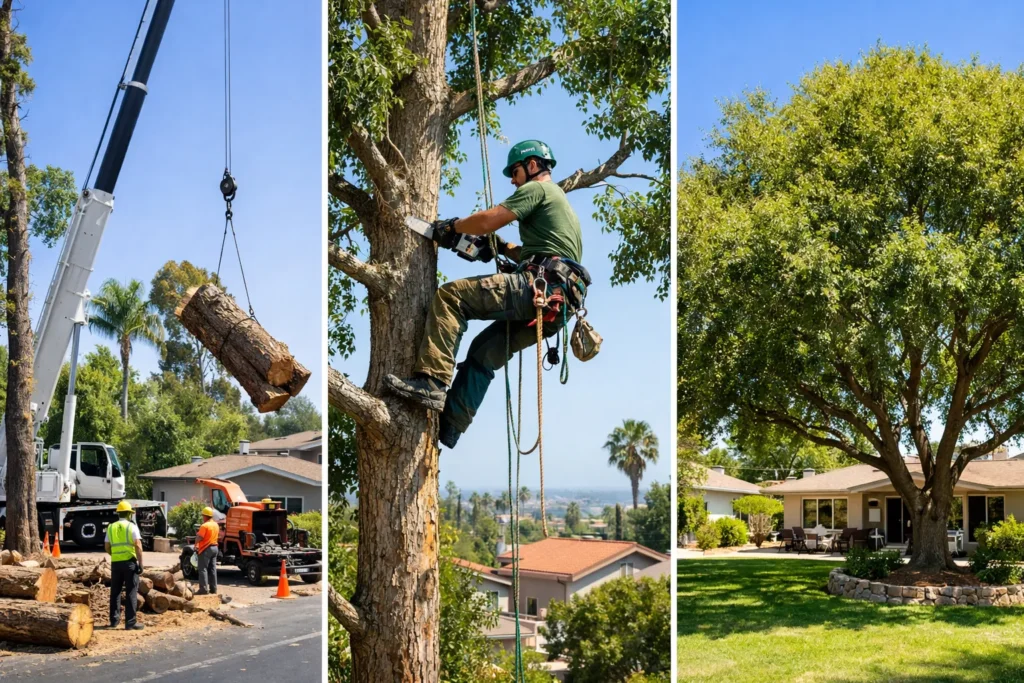
This is my most controversial opinion.
Removal is often recommended because it is profitable, not because it is necessary.
Good arborists think like doctors. Bad ones think like demolition crews.
Removal is necessary when:
- The tree is dead or structurally compromised.
- Root damage threatens foundations or pipes.
- The tree is actively failing.
- The species is invasive or legally restricted.
Trimming is better when:
- The canopy is unbalanced.
- Dead limbs create fall risk.
- The tree shades solar or interferes with power lines.
- Growth is interfering with structures.
Preservation is better when:
- The tree is healthy.
- The risk is perceived, not real.
- Removal would reduce property value or shade benefits.
A mature tree can increase property value by 5 to 15 percent. Removing one without reason can cost more than any removal quote.
Case study 1: emergency eucalyptus near power lines
Location: Clairemont
Tree: 80-foot eucalyptus leaning toward roof
Quote 1: $3,800 emergency removal
Quote 2: $2,400 scheduled removal in 3 days
Final cost: $2,550 including permit
The homeowner panicked after the storm. A crew offered same-day removal at a premium.
We inspected it. The lean was dramatic but stable. Waiting three days saved her $1,250.
Lesson: urgency pricing is real. Not all storms create emergencies.
Case study 2: HOA conflict mistake
Location: La Jolla HOA
Tree: mature ficus
Homeowner action: removed without HOA approval
Result: $4,000 fine and mandatory replanting
The homeowner assumed ownership meant control. It did not.
Lesson: legal permission matters more than physical ownership.
Tools and equipment you are really paying for
A modern tree removal crew is a moving engineering operation.
- Bucket trucks lift climbers safely.
- Cranes control heavy sections.
- Rigging systems manage swing radius.
- Stump grinders remove root plates.
Brands you may see include Vermeer, Bandit, Toro, Husqvarna, and Spider Lift.
If a crew arrives with ropes and a chainsaw only, be cautious.
How to avoid being overcharged
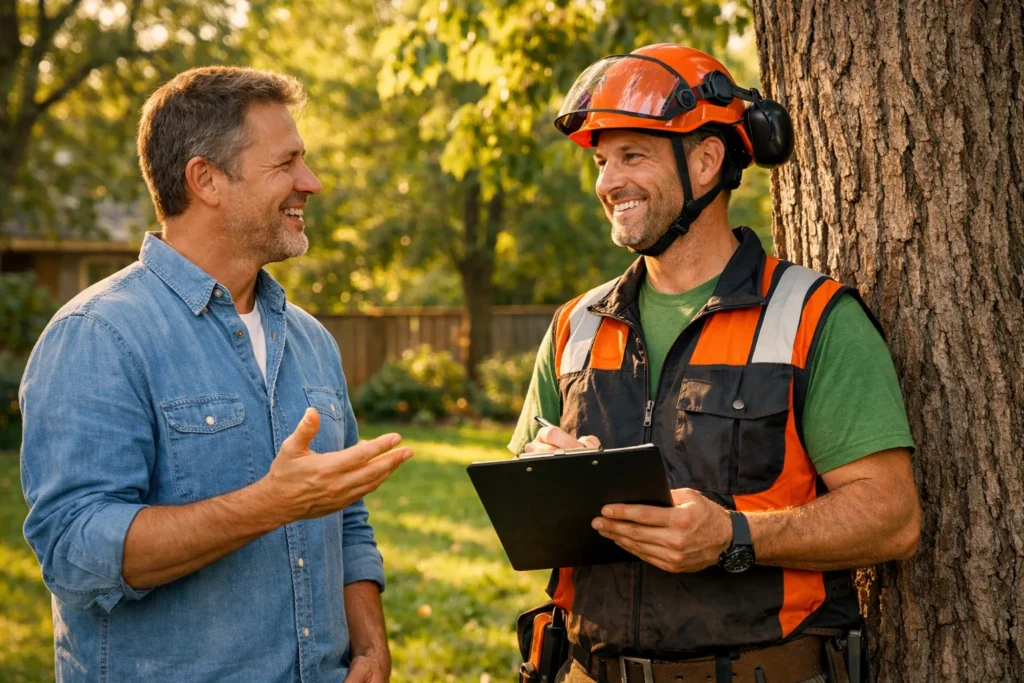
- Get three quotes minimum.
- Ask how they plan to remove it, not just what it costs.
- Ask about insurance and licensing.
- Ask whether permits are included.
A good contractor explains risk. A bad one explains speed.
Case study 3: how panic inflated a $1,400 job into $3,200
Location: North Park
Tree: 60-foot pepper tree leaning over garage
Initial quote: $3,200 “because it’s dangerous”
Second quote: $1,450 scheduled removal with crane assist
The first contractor used fear. The second used physics.
The tree leaned, yes. But the trunk was stable. Rigging plus a small crane made it safe.
The homeowner waited one week. She saved $1,750.
Lesson: danger is not binary. It is measurable.
Case study 4: waiting too long cost more than early removal
Location: Rancho Bernardo
Tree: dying pine near pool
Ignored for two years
Outcome: roots cracked pool decking
Removal cost: $1,800
Pool repair: $12,000
Lesson: delay can be far more expensive than action.
Case study 5: preservation saved both money and shade
Location: Point Loma
Tree: mature jacaranda shading west-facing home
Quote to remove: $2,200
Solution: structural pruning and cabling
Cost: $620
Outcome: risk reduced, shade preserved, home cooler by about 5 degrees in summer
Lesson: removal is not the default best answer.
How to get accurate quotes and control the process
Step 1: get three structurally different quotes
Not just three prices. Three plans.
One crew may climb. One may use a crane. One may use a lift.
Different methods equal different risk and cost.
Step 2: ask these exact questions
- How will you control limb swing?
- What happens if something goes wrong?
- Who pulls permits?
- What insurance do you carry?
- Do you include cleanup and stump grinding?
The quality of answers predicts the quality of work.
Step 3: read the quote, not just the number
Look for:
- Permit handling
- Cleanup scope
- Stump removal inclusion
- Insurance limits
- Timeline
A cheap quote that excludes cleanup or permits is not cheap.
Cost-saving strategies that actually work
Off-season scheduling
Late fall and winter are cheaper. Demand drops. Crews negotiate.
Summer and storm season spike prices.
Bundle services
Removing two trees at once often costs less than two separate jobs.
Coordinate with neighbors
One crane day can serve multiple yards. Split the cost.
Insurance claims
Storm damage sometimes qualifies for homeowner insurance. Ask before paying.
Common and expensive mistakes
Choosing price over competence
This causes property damage, injuries, lawsuits, and regrets.
Ignoring permits
Fines erase savings.
Not verifying insurance
If a worker is hurt on your property without coverage, you may be liable.
Waiting too long
Decay and roots do not wait.
Environmental and ethical considerations
This matters more than people think.
San Diego loses urban canopy every year. Trees cool homes, reduce runoff, and improve air quality.
Removing a mature tree increases heat, energy use, and long-term costs.
Ethically, preservation is better when safety allows it.
Environmentally, replacement matters when removal is necessary.
Planting a new tree is not symbolic. It is corrective.
Future Trends in Tree Removal Pricing and Regulation in San Diego
Three changes are coming.
Higher labor and insurance costs
This pushes prices upward over time.
More regulation
Cities are protecting canopy more aggressively.
Climate change impact
More storms. More emergency removals. More urgency pricing.
The smart move is proactive management, not reactive removal.
Sidebar: what I wish I’d known earlier
I used to think trees were either safe or dangerous.
Now I know they exist on a risk spectrum.
Understanding that saves money, property, and stress.
FAQs
How much does palm tree removal cost in San Diego?
Palm trees cost between $500 and $1,500 to remove depending on height and access. They are fibrous, heavy, and difficult to rig safely, which increases labor time and risk.
Is stump grinding required by law?
No, but leaving a stump creates trip hazards, pest risks, and regrowth problems. Most homeowners choose to grind it for $150 to $300.
Can I remove a tree myself?
You can, but you should not. Tree removal is one of the most dangerous home services. Injuries and fatalities are common. Liability is enormous.
What happens if my neighbor’s tree falls on my house?
Responsibility usually depends on prior notice and negligence. Document concerns early.
Does insurance cover tree removal?
Sometimes. If a tree damages a covered structure during a storm, insurance may cover removal and repair.
How long does the process take?
Most removals take half a day to one day. Permits may add one to three weeks.
What months are cheapest?
November through February.
Are arborists required?
Not legally, but certified arborists reduce risk and improve outcomes
Can I plant a replacement tree?
Yes, and you should. Many cities encourage it and some require it.
Is trimming tax deductible?
Usually no, unless it relates to business property.
Can removal increase home value?
Yes, when it improves safety or aesthetics. It can also reduce value if shade is lost.
Do roots damage foundations?
Rarely directly, but they exploit existing cracks.
What is the biggest red flag in a quote?
Pressure tactics like “today only pricing.”
Do I need to be home during removal?
It helps, but it is not required if access is clear.
Final Decision Framework
Ask yourself:
- Is the tree structurally unsafe?
- Is it legally removable?
- Is removal truly better than trimming?
- Can I schedule instead of rush?
- Have I compared methods, not just prices?
If you can answer those, you are in control.
Closing
The homeowner in Clairemont waited three days. She saved $1,250. The tree came down safely. No fines. No damage. No regret.
That is the outcome this guide is meant to create.
Tree removal is not about cutting wood. It is about managing risk, law, cost, and long-term value with clarity.
If you treat it that way, you will make better decisions than most people do.
And you will save money.
Final Question
What is the one thing about your tree situation that feels most uncertain or stressful right now?
Tell me. I will help you think it through.